

Table of Contents
Early Signs Your Child May Need ABA Therapy
Understanding the signs child needs ABA therapy is the first step toward getting your family the right support. You might notice limited babbling or speech, difficulty making eye contact, repetitive movements, or strong reactions to changes in routine — all of which can be possible indicators that an evaluation could be helpful.
Noticing these signs doesn’t mean you’ve done anything wrong; early, evidence-based intervention can make a meaningful difference. Speaking with a Board Certified Behavior Analyst (BCBA) is the best way to understand your child’s needs. Our goal is to help every family Succeed with ABA, starting with the right early steps.
If you’re noticing these signs, exploring ABA therapy providers that accept insurance can help you start that journey. Our team handles insurance verification and benefits checks so you can focus on your child. Understanding ABA and early developmental screening is the natural next step — we’ll walk through that in the next section.
Before You Begin: Understanding ABA and Early Developmental Screening
If the signs we discussed in the previous section feel familiar, the next step is understanding what ABA therapy is and why early screening matters. ABA, or Applied Behavior Analysis, is an evidence-based approach that builds communication, social, and daily living skills through positive reinforcement. It’s not a medical diagnosis but a personalized way to address skill deficits and behaviors. Our early developmental screening looks at areas like social communication deficits. Because Brighter Care ABA provides home-based therapy in Richmond, Virginia, this screening and any subsequent treatment happen right in your child’s natural environment.
Our Board Certified Behavior Analysts (BCBAs) lead the assessment process. They conduct a comprehensive evaluation to understand your child’s strengths and challenges, then create an individualized treatment plan. As required by the Behavior Analyst Certification Board (BACB), Registered Behavior Technicians (RBTs) deliver one-on-one therapy under BCBA supervision requirements, with the BCBA overseeing every session.
Understanding your child’s unique needs through screening sets the stage for addressing specific skills. A bright future is waiting for your child, and it begins with recognizing where they can benefit from extra support. In the following section, we’ll look closely at communication red flags that may signal it’s time to reach out.
Recognize Communication Red Flags
Once families understand what ABA therapy involves and how early screening works, we encourage parents to notice communication patterns that may signal a need for evaluation:
- No babbling by 9 months
- No single words by 16 months
- No two-word phrases by 24 months
- Loss of previously acquired words or sounds
- Limited use of gestures like pointing, waving, or reaching
- Difficulty initiating or responding to communication, such as not turning when called
- Frequent echolalia or scripted language (repeating TV lines or phrases without functional intent)
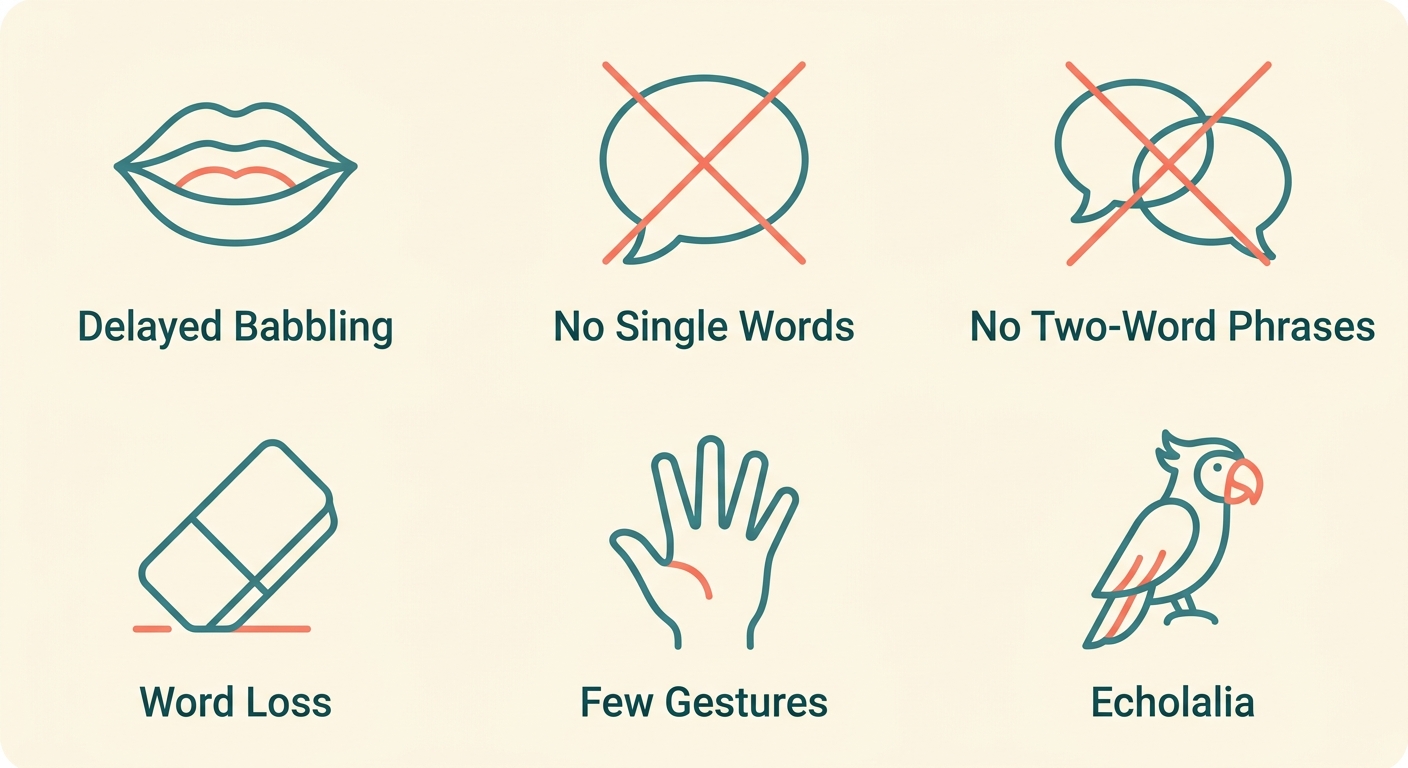
When several signs appear, an ABA evaluation can clarify your child’s communication strengths and guide next steps. These communication red flags often appear alongside repetitive and restrictive behaviors.
Observe Social Interaction Patterns
When we pay attention to communication, social interaction tells the next part of the story. At the playground or during a family meal, we can see how a child connects with people around them.
One child might play alone on the swings without trying to join. Another may never point to show you a toy or follow where you look. Some kids don’t respond when their name is called at a birthday party or seem unsure how to approach a friend. Others might miss a peer’s sad expression or have trouble taking turns. These moments aren’t about labels—they’re clues that social skills could use extra support.
If you’re noticing these patterns consistently, we want you to know you’re not on your own. A BCBA evaluation from our team in Richmond or elsewhere in Virginia can help you understand what’s behind them. And while social signs are important, many parents also see repetitive movements or rigid routines—exactly what we’ll explore next.
Identify Repetitive and Restrictive Behaviors
Beyond social interaction patterns, you may notice repetitive or restrictive behaviors that stand out. For example, a child might frequently flap their hands, rock back and forth, or spin in place for long periods of time. They may also become intensely fixated on a single toy or topic, insist on following the same rigid routine every day, or show significant distress when a schedule changes unexpectedly.
Many children display occasional repetitive or rigid behaviors during typical development, but when these actions are intense, frequent, or begin to interfere with daily activities, play, or learning, they can signal that extra support could be helpful.
Through individualized ABA therapy, we work with your child to build flexibility, improve communication, and teach replacement behaviors that fit more naturally into everyday life—without making unrealistic promises, but with a commitment to measurable progress. Pay attention to these behaviors alongside developmental milestones, as they together help paint a more complete picture of your child’s needs.
Monitor Developmental Milestones and Regression
After identifying repetitive behaviors, we look at your child’s overall development.
- Communication skills: babbling, first words
- Social engagement: responding to their name, eye contact, shared enjoyment
- Motor skills
- Cognitive and play skills
We pay close attention to regression — losing words, eye contact, or social skills your child already had. This often shows up between 12 and 24 months. Keep a dated log of when skills appear and when they fade, noting how often, how long, and in what setting: at home, around peers, or during transitions.
Observations are not a diagnosis. They are signals that a BCBA evaluation can clarify next steps. We encourage acting early rather than waiting, because earlier support helps children begin building important skills sooner. When milestones stall or regression occurs, it often sits beneath the behavioral challenges families see — which is why tracking development makes a real difference.
Understand Behavioral Challenges and Rigidity
When parents begin researching the signs child needs aba therapy, rigidity and extreme reactions to change are often near the top of the list. Alongside missed developmental milestones, many families notice an inflexible pattern that goes beyond typical toddler or preschooler preferences.
- Insistence on routines – needing to do things the exact same way each time.
- Difficulty transitioning – meltdowns when moving from one activity to another.
- Extreme distress over small changes – reactions that feel out of proportion to the trigger.
Our BCBAs use an Antecedent-Behavior-Consequence (ABC) framework to uncover what triggers these reactions and what follows that might reinforce them, laying the groundwork for a tailored ABA plan that builds coping and flexibility step by step, and include caregiver coaching to support skill transfer.
Notice Sensory Sensitivities and Unusual Responses
Some of the behavioral challenges we discussed earlier may actually be sensory overload in disguise. When a child’s nervous system over- or under-responds to everyday sensations, what looks like resistance can be a sensory processing difference. Hyper-sensitivity can make bright lights, loud sounds, or certain textures feel unbearable; hypo-sensitivity may drive a child to crash into furniture, spin, or seek deep pressure.
Everyday examples we notice include covering ears at the vacuum or flushing toilet, gagging on lumpy foods, refusing clothing tags or seams, and melting down during haircuts. These patterns often disrupt mealtimes, bath time, and getting dressed.
When sensory differences disrupt familiar routines like dressing or eating, these signs can indicate that a child may benefit from an ABA therapy evaluation. A BCBA assessment helps families understand what the child’s sensory responses are communicating and builds personalized strategies. Because sensory sensitivities frequently appear during daily living skills, the next section explores those everyday milestones.
Evaluate Daily Living Skills and Adaptive Functioning
Beyond sensory responses, daily living skills and adaptive functioning are an area where parents may notice signs that their child may benefit from support.
- Dressing independently
- Feeding with utensils
- Using the toilet
- Brushing teeth and hand washing
- Following simple routines like putting toys away
Parents compare their child’s abilities to typical developmental expectations: a 3-year-old might help with pulling on clothes, while a 5-year-old can usually manage buttons and bathroom trips on their own. Gaps between settings — for example, when a child performs these tasks at school but struggles at home — are important clues that adaptive functioning may be uneven.
When several of these signs appear together, a BCBA evaluation can break routines into small, teachable steps using task analysis. Through home-based ABA therapy, we target these skills in your family’s natural environment. We work with families in Richmond and across Virginia to make these everyday routines manageable and rewarding.
Addressing Common Concerns About ABA and Child Behavior
After taking stock of your child’s daily living skills, it’s natural to feel curious and cautious about whether extra support could help. Those questions deserve honest, caring answers.
“Will ABA be too rigid?” Ethical ABA is individualized and play-based, focused on building communication, independence, and confidence while honoring your child’s personality. Programs emphasize meaningful, functional skills tied to your child’s daily routines rather than rote drills.
“Will it change who my child is?” ABA teaches practical skills—like asking for a snack or coping with frustration—that expand a child’s choices and ability to express themselves. Our aim is to add options and confidence, not to replace a child’s identity.
“How do I know the professionals are qualified?” Every treatment plan at Brighter Care ABA is designed and overseen by a Board Certified Behavior Analyst (BCBA) who meets the standards of the behavior analysis certification board. Day-to-day therapy is delivered one-on-one by trained Registered Behavior Technicians (RBTs) under BCBA supervision, so you can feel confident your child is receiving ethical, quality care.
“How can we afford therapy?” We know administrative hurdles can add stress, and we work to make access easier. Our team in Richmond and across Virginia assists with insurance management and authorization, helping to reduce paperwork so you can focus on your child’s progress and well-being.
When concerns are addressed with clarity and compassion, the next step feels more manageable. From here, we’ll shift toward how supporting your child’s development with ABA can open pathways to greater connection, independence, and everyday joy.
Supporting Your Child’s Development with ABA Therapy
Recognizing the signs child needs aba therapy is a courageous first step toward helping your child thrive. We understand seeking support can feel overwhelming.
Our personalized, home-based ABA therapy brings evidence-based care directly into your family’s daily routine, overseen by Board Certified Behavior Analysts (BCBAs) certified by the Behavior Analyst Certification Board (BACB). This approach ensures your child receives compassionate, ethical support tailored to their unique strengths and needs. We also help families navigate their insurance benefits—managing authorizations and claims—so you can focus on what matters most.
We believe every child deserves a supportive path to development, and our team is ready to answer your questions and guide you through the process. If you’re ready to explore how ABA can make a difference, we invite you to reach out. Contact Brighter Care ABA at (833) 400-3970 to learn more about our services or schedule a consultation. Please consult with a healthcare professional for diagnosis or treatment advice.
Schedule Your ABA Evaluation Today
You’ve learned to identify the early signs your child may benefit from ABA therapy—from missed communication milestones to repetitive behaviors and sensory sensitivities. Now you can take the proactive step by scheduling a comprehensive BCBA evaluation. Our team at Brighter Care ABA provides personalized assessments right in your home, where your child feels most comfortable. We work with your insurance to navigate coverage and authorization, so you can focus on your child’s progress. A Board Certified Behavior Analyst will design a tailored plan and oversee every session delivered by our trained therapists. Your child’s brighter future starts with one conversation.
Schedule Your ABA Evaluation Today
