



Table of Contents
- Understanding ABA Therapy Prior Authorization in Illinois and Virginia
- What Is ABA Therapy Prior Authorization and Why It Matters
- The ABA Therapy Prior Authorization Process: A Step-by-Step Guide
- Making Medical Necessity Work for Your Family
- Frequently Asked Questions About ABA Therapy Prior Authorization
- Start Your Path to Funded ABA Therapy
Understanding ABA Therapy Prior Authorization in Illinois and Virginia
Before your child begins Applied Behavior Analysis therapy, most insurance plans require prior authorization — a formal pre-approval that confirms the recommended services are medically necessary. This process is commonly referred to as aba therapy prior authorization, and it plays a critical role in ensuring your child receives the right care without unexpected costs.
In both Illinois and Virginia, insurers ask providers to demonstrate medical necessity for aba therapy before authorizing sessions. At its core, this means submitting a detailed aba clinical treatment plan that outlines your child’s current skills, targeted goals, and the evidence-based intervention methods our Board Certified Behavior Analysts will use. The treatment plan also projects expected progress, giving insurers confidence that the recommended hours are appropriate and outcome-focused.
Although the specific forms and timelines can differ slightly between states, the fundamental authorization process is the same. Our team understands the nuances of working with multiple carriers in both regions, which allows us to streamline what can otherwise feel like an overwhelming administrative hurdle.
We guide families through every step so they can concentrate on what matters most — their child’s development. Through our comprehensive ABA therapy services children receive from us, we handle the insurance paperwork, coordinate with payers, and advocate on your behalf. Our Registered Behavior Technicians, who meet RBT certification 2026 standards, deliver compassionate one-on-one care once authorization is secured.
Please consult with a healthcare professional for diagnosis or treatment advice.
What Is ABA Therapy Prior Authorization and Why It Matters
Securing the right support for your child can feel overwhelming, especially when navigating the practical steps required to start services. Before your child can begin Applied Behavior Analysis (ABA) therapy, most insurance plans require a formal review and approval process called aba therapy prior authorization. This step confirms that the recommended treatment is medically necessary and covered under your policy. It’s not just a formality—it’s a safeguard that helps you avoid unexpected out-of-pocket costs for the care your child needs.
Prior Authorization
Prior authorization is the process where your insurance company reviews and approves coverage for a specific treatment before the service is provided. For ABA therapy, families must obtain this approval before starting sessions to prevent denied claims. The approval confirms that the therapy is a necessary medical intervention for your child’s diagnosis, rather than an optional or educational service. Without it, even essential hours of therapy can become a significant financial responsibility. This initial gateway ensures that the treatment plan aligns with your insurance benefits and meets the insurer’s criteria for evidence-based care.
Key Components of the Authorization Process
The authorization process hinges on a clear demonstration of medical necessity for aba therapy. Your provider must submit a detailed aba clinical treatment plan that includes a formal diagnosis of autism spectrum disorder, a comprehensive evaluation from a Board Certified Behavior Analyst (BCBA), and specific, measurable goals with the number of therapy hours requested. This documentation must show how the proposed intervention directly addresses your child’s core deficits in communication, social skills, and adaptive behavior. Treatment plans are grounded in evidence from sources like a biomedical research database, which insurers reference to validate that ABA is an effective, medically necessary treatment. Additionally, your provider must complete insurance-specific forms and submit everything with the correct CPT (Current Procedural Terminology) codes to initiate the review.
Why Families Need Support with Prior Authorization
Managing the prior authorization process alone can be fraught with pitfalls that delay or block access to care. Common challenges include submitting incomplete paperwork, providing insufficient medical necessity justification, missing critical submission deadlines, or facing confusion about insurance policy requirements. When a request is denied, the appeals process can be both stressful and time-consuming, pushing the start of needed therapy further away. We step in to handle these hurdles for you. Our team assists with gathering the right documents, filling out forms correctly, and staying on top of every deadline. We also liaise directly with insurance companies and track your submission, which reduces the risk of denials and speeds up the approval process so your child can start therapy sooner.
You’re not on your own. With prior authorization in place, families can move forward with confidence. Next, we’ll walk through the step-by-step authorization process.
Disclaimer: Results may vary based on individual patient circumstances.
The ABA Therapy Prior Authorization Process: A Step-by-Step Guide
Now that you understand the purpose of prior authorization, let’s walk through the exact steps to obtain it for your child. Navigating the prior authorization for ABA therapy may feel daunting, but our dedicated team manages the entire insurance process so you can focus on your family. The following guide outlines a clear, five-step pathway to secure the necessary approval and begin your child’s transformative journey with Brighter Care ABA.
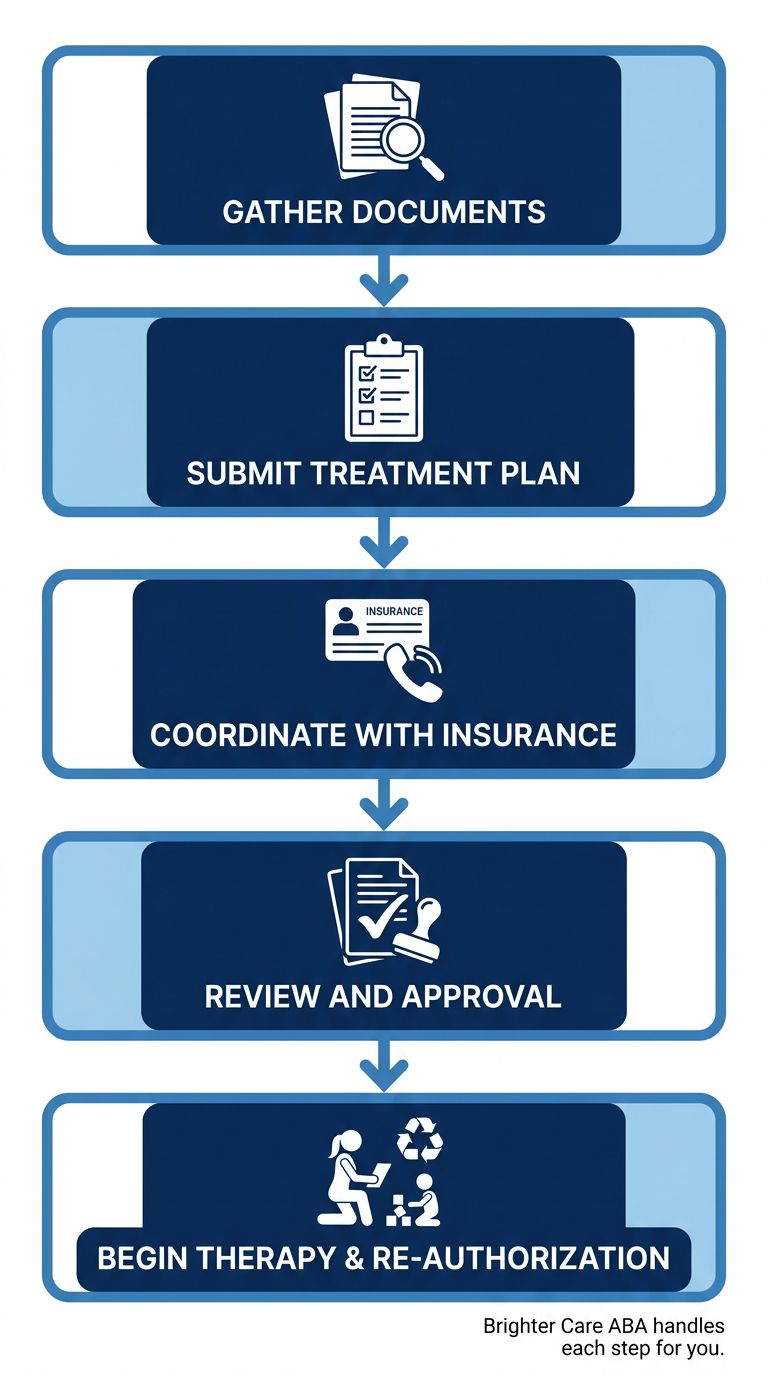
Process flow for ABA therapy prior authorization
Step 1: Gather Required Documents
The first stage in the ABA therapy approval process is assembling the essential paperwork that demonstrates your child’s eligibility and need for services. Having these documents organized upfront can significantly streamline the submission. Here’s what you’ll typically need:
- A formal autism diagnosis from a qualified healthcare professional
- Our comprehensive ABA clinical treatment plan, which we will help you prepare
- A detailed medical necessity letter justifying the need for therapy
- Your insurance provider’s specific intake and authorization request forms
The medical necessity for ABA therapy is a critical component, as it details why this intervention is essential for your child’s development, linking their diagnostic needs directly to the recommended treatment approach.
The following table provides a clear comparison of the documents required for initial authorization versus those needed for later re-authorization.
| Document Type | Initial Authorization | Re-Authorization Timing | Purpose |
|---|---|---|---|
| Formal Autism Diagnosis | Required | Verified annually | Confirms eligibility for coverage |
| Clinical Treatment Plan | Required | Updated every 6 months | Provides goals, frequency, and duration |
| Medical Necessity Letter | Required | Submitted at each review | Justifies ongoing ABA therapy |
| Progress Reports | Not required initially | Submitted at re-authorization | Demonstrates measurable outcomes |
As shown above, the initial submission focuses heavily on establishing eligibility, while the re-authorization process leans on documented progress to justify continuing services. We manage these requirements on your behalf, ensuring no detail is missed. Each document serves as a foundational pillar in the insurance authorization for ABA, and our team meticulously manages these details on your behalf so you can feel supported from the very start.
Step 2: Submit the ABA Clinical Treatment Plan
Once the initial documents are gathered, our clinical team—led by Board Certified Behavior Analysts (BCBA) who hold the recognized behavior analyst certification—designs an individualized and detailed ABA clinical treatment plan. This isn’t a generic template; it is a carefully crafted roadmap built from a thorough assessment of your child’s unique strengths and areas for growth. According to Brighter Care ABA, our process begins with a comprehensive evaluation using research-backed tools to establish baseline needs and set therapeutic objectives. The plan includes measurable goals, recommended session frequency, and the overall duration of therapy, creating a compelling case for approval. By embedding specific, data-driven objectives directly into the plan, we demonstrate a clear path to meaningful developmental outcomes that insurance providers look for when considering the medical necessity for ABA therapy.
Step 3: Coordinate with Insurance
With your child’s tailored treatment plan and all supporting documentation in hand, our team then takes over the complex task of coordinating directly with your insurance provider. As part of our robust insurance management service, we submit the comprehensive treatment plan, the medical necessity documentation, and any other payer-specific forms required for review. Navigating the ABA therapy prior authorization process is a core part of what makes our support unique; we handle the back-and-forth communication, promptly answer insurer questions, and provide them with the clinical evidence needed to justify services. As Brighter Care ABA highlights, we act as your personal guide to navigate the complexities of insurance eligibility and access to care. This proactive approach effectively removes the administrative burden from your shoulders, embodying our key phrase: You’re not on your own.
Step 4: Review and Approval Timeline
After submission, the initial authorization review timeline typically spans from two to eight weeks, although this can vary by insurance carrier. Several factors can influence this timeline, including incomplete documentation requests, high claim volumes at the insurer, or the need for additional peer reviews of the treatment plan. Our team actively monitors the application’s status to mitigate delays and keep your journey on track. To avoid common pitfalls, we recommend responding swiftly to any follow-up requests from the insurance company and allowing us to maintain organized records of all communications. The medical necessity for ABA therapy must be clearly communicated to meet specific policy criteria, and our experienced understanding of the insurance authorization for ABA helps ensure a smoother review from these gatekeepers.
Step 5: Begin Therapy and Plan for Re-Authorization
Once we receive that final approval, there is no waiting period—we connect with you immediately to schedule your child’s first sessions so they can begin services without delay. A bright future is waiting for your child, and our friendly team moves quickly to initiate the life-changing benefits of 1:1 therapy. While your child engages in skill-building, our back-office team proactively tracks all re-authorization deadlines, which commonly occur every six months. To prepare, we will systematically collect updated progress reports and clinical data that demonstrate measurable outcomes, ensuring there is no disruption in your child’s treatment or momentum toward their goals. We count on our parents to share home observations, and together, we build a continuous, compelling case for ongoing support.
Disclaimer: Results may vary based on individual patient circumstances. Please consult with a healthcare professional for diagnosis or treatment advice.
Next, learn practical tips to avoid common authorization delays and ensure a smooth process, empowering you to navigate the entire journey with confidence and clarity.
Making Medical Necessity Work for Your Family
Understanding prior authorization is impossible without grasping a concept that sits at the center of every insurance decision: medical necessity. For families seeking in-home ABA therapy, this term determines whether an insurer will approve the services their child needs. When Brighter Care ABA manages the authorization process, we translate clinical evidence into documentation that clearly demonstrates medical necessity for each child we serve. You’re not on your own as we navigate the steps together.
What Is Medical Necessity?
Medical necessity means that ABA therapy must be clinically appropriate and essential for treating an autism spectrum disorder diagnosis according to generally accepted standards of care. This requirement is the foundation of any prior authorization submission — without meeting this standard, insurers will not approve coverage. Government health data consistently validates that ABA interventions are evidence-based, and payers rely on this clinical standard when reviewing requests for ABA therapy prior authorization. Demonstrating medical necessity for ABA therapy means showing how treatment addresses specific deficits in communication, social skills, or adaptive functioning that affect a child’s daily life.
How Brighter Care ABA Documents Medical Necessity
Our clinical team, led by Board Certified Behavior Analysts (BCBAs), constructs treatment plans that explicitly document medical necessity through goal setting, data tracking, and professional validation. Brighter Care ABA begins with a comprehensive evaluation that establishes baseline skills, then builds an ABA clinical treatment plan with specific, measurable objectives tied to each area of need. These plans are the core of our ABA therapy services children rely on, integrating progress metrics that show insurers exactly how therapy will address diagnosed challenges. Our documentation includes detailed medical necessity letters, continuous data collection, and professional validation from licensed clinicians. We handle insurance submissions and claims management directly, coordinate with payers throughout the process, and provide proactive re-authorization tracking with automated reminders. If coverage is denied, Brighter Care ABA supports families through the appeal process, revisiting documentation to strengthen the clinical justification.
The following table compares how Brighter Care ABA’s documentation process differs from the general approach families often encounter when navigating medical necessity requirements alone.
| Aspect | Brighter Care ABA Approach | General Process |
|---|---|---|
| Document preparation | Clinical team creates comprehensive treatment plans and medical necessity letters | Families must find providers willing to create documentation |
| Insurance submission | Direct coordination with insurance, claims management included | Families submit documents and follow up independently |
| Re-authorization tracking | Proactive reminders and documentation updates | Families must track deadlines and submit new documents |
| Appeal support | Assistance with insurance appeals if coverage is denied | Families need to navigate appeal process on their own |
These differences highlight how professional advocacy can transform the authorization experience. By managing every stage — from initial document preparation through appeal support — Brighter Care ABA removes the administrative weight that often falls heavily on parents.
Tips for Families to Support Medical Necessity Documentation
Even with a dedicated clinical team leading the process, parents play an important supporting role. Gather detailed behavioral notes from home and community settings, sharing specific observations about communication attempts, social interactions, and daily living skills that illustrate clinical need. Provide school reports, previous evaluations, and any correspondence from educators that document functional challenges. Respond promptly when our team requests additional information, and maintain open communication about changes in your child’s behavior or circumstances. When families partner with an experienced provider like Brighter Care ABA, the likelihood of a smooth authorization increases considerably because the documentation reflects both professional assessment and nuanced parent perspective. With Brighter Care ABA handling the documentation, you can focus on your child’s progress. Results may vary based on individual patient circumstances.
Frequently Asked Questions About ABA Therapy Prior Authorization
Now, let’s answer some common questions about the prior authorization process, so you know what to expect every step of the way.
Quick Answers to Top Authorization Questions
How long does the aba therapy prior authorization process take? It typically takes 2–4 weeks, though timelines can vary depending on your specific insurance provider. We track the progress for you and keep you updated, so you’re not on your own.
Who handles the prior authorization for ABA therapy? Our dedicated team, led by a Board Certified Behavior Analyst (BCBA) and our insurance specialists, manages the entire submission from start to finish. We handle the paperwork so you can focus on your family.
What is included in an aba clinical treatment plan? The plan includes a comprehensive BCBA assessment, individualized therapy goals, and a recommended number of weekly hours. These details establish the case for the ABA therapy approval process, showing exactly how your child will benefit.
Does an autism diagnosis guarantee insurance coverage? No, a diagnosis alone is not enough. Insurers require a demonstration of medical necessity for aba therapy, meaning we must show the treatment is essential for your child’s development based on our clinical assessment.
What documents are needed for the submission? We generally need a formal diagnosis letter, a copy of your insurance card, and signed consent forms. Our team works with you to gather everything, making the process as smooth as possible. Results vary by individual case. If you’re interested in joining our growing team, explore our current ABA therapist jobs; our RBTs are fully certified, and you can learn more about the RBT certification 2026 requirements.
Start Your Path to Funded ABA Therapy
Beginning your aba therapy prior authorization journey is simple with our dedicated team guiding each step. We start by verifying your insurance benefits and conducting a BCBA-led evaluation to establish the medical necessity for aba therapy. Our clinical team then designs an individualized aba clinical treatment plan with input from the behavior analysis association to support approval. We manage all paperwork and include parent training to satisfy coverage requirements. You’re not on your own — A Bright Future is Waiting for Your Child
Results may vary based on individual patient circumstances. Please consult with a healthcare professional for diagnosis or treatment advice.
Resources
- Access RBT Task List Updates and ABA FAQ
- Get Comprehensive ABA Therapy with Insurance Assistance
- Explore ABA Careers with Competitive Pay and Benefits
- Get Expert ABA Therapy with Insurance Management
- Find Autism Therapy Services with Personalized Care
- Find In-Home ABA Therapy with BCBA Oversight
- Review Our Privacy Policy for Data Protection
- Explore NCBI’s Biomedical Databases and Research Tools
- Get BCBA and RBT Certification Updates from BACB
- Access ABAI’s Professional Development and Career Resources
