

Table of Contents
Understanding ABA Therapy Autism Benefits
For many families in Virginia and Illinois, the true value of ABA unfolds through real-world progress. When exploring the aba therapy autism benefits for your child, it helps to understand Applied Behavior Analysis as a highly personalized, evidence-based therapy that encourages positive behaviors and teaches practical life skills. We focus on building social communication skills—such as initiating interactions and taking turns—and adaptive behavior skills like following routines and self-care, all within your natural home environment. The science behind ABA is strong; families can explore the deep scientific grounding through the biomedical research portal to feel confident. Our board-certified BCBAs oversee every 1:1 session delivered by caring RBTs in your home, and we count on our parents as essential partners through ongoing training. Results may vary, but we believe every child can Succeed with ABA and a bright future is waiting for your child.
1. Improved Social Communication
One of the most impactful aba therapy autism benefits is improved social communication. ABA therapy breaks social communication skills into small, teachable steps, such as initiating conversations, taking turns, and interpreting body language. At Brighter Care ABA, we design individualized plans overseen by Board Certified Behavior Analysts and implemented through one-on-one sessions with Registered Behavior Technicians. This personalized pace allows your child to build confidence in their natural settings.
Home-based ABA enables practice in the environments where social interactions naturally occur—at home and in the community. Parent training gives you strategies to reinforce these skills daily, so you’re not on your own. Progress is data-driven and goals are adjusted based on your child’s growth. Results may vary, but many families often see meaningful improvements. In addition to social communication, ABA therapy also improves adaptive behavior skills, helping children navigate daily routines with greater independence.
2. Early Intervention and Long-Term Gains
For families exploring the aba therapy autism benefits, early intervention — starting as young as 18 months — may offer a critical window to build communication, social, and adaptive skills that shape a child’s long-term development.
Evidence-based models such as naturalistic developmental behavioral interventions autism show how play-based, home-based therapy helps children practice social communication skills in everyday interactions. In our home-based sessions, a Registered Behavior Technician works one-on-one with your child under a BCBA’s supervision, so skills are practiced in real-world settings. Over time, this approach may also strengthen adaptive behavior skills like following daily routines and self-care, building independence.
While each child’s progress is unique, early intervention may support meaningful communication and daily living gains. Results may vary based on individual patient circumstances. Please consult with a healthcare professional for diagnosis or treatment advice.
You’re not on your own — our team is here to guide your next steps. A Bright Future is Waiting for Your Child.
3. Mastering Daily Living Skills
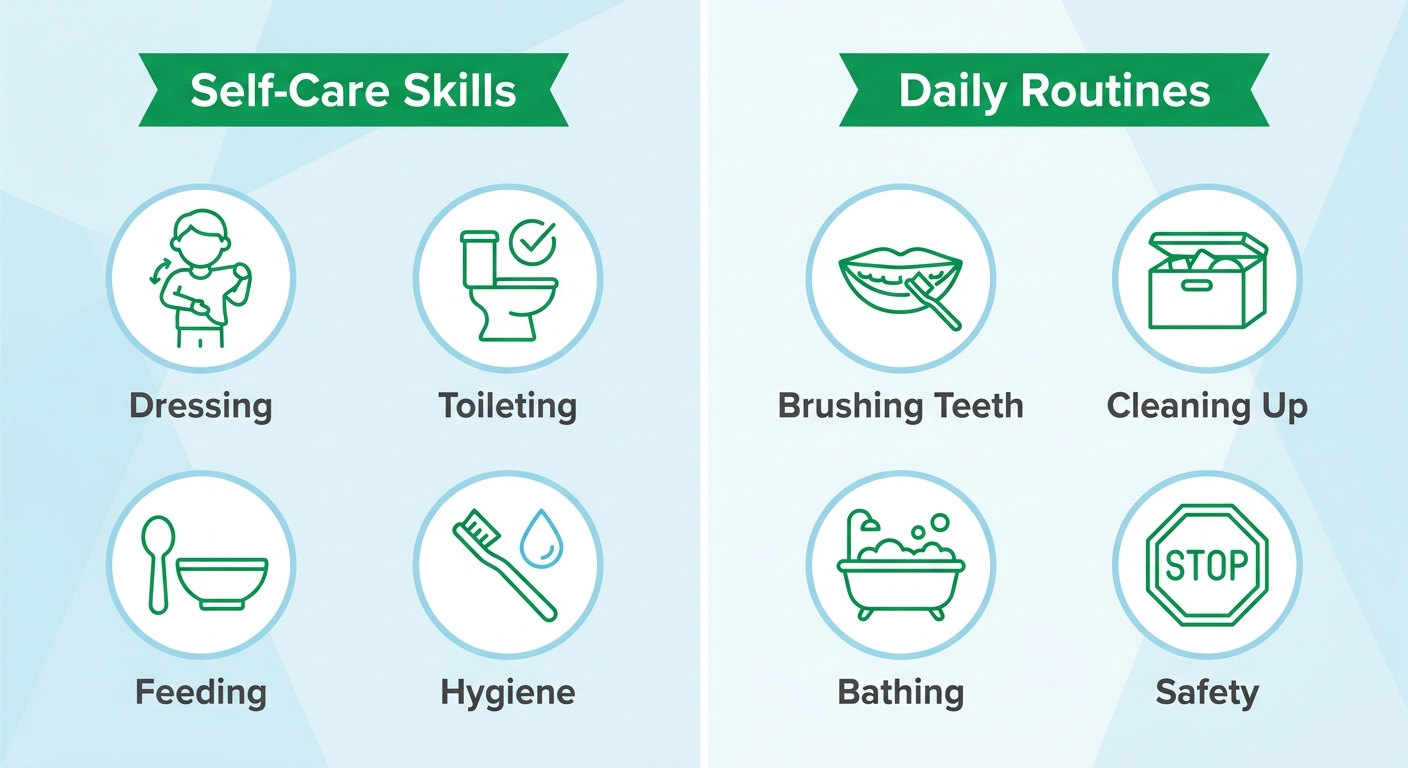
Beyond building communication and social skills, the aba therapy autism benefits include mastering essential daily routines — from brushing teeth to tidying toys. We teach these self-care skills through task analysis, breaking each routine into manageable steps your child can practice in the comfort of your home.
We target dressing, feeding with utensils, handwashing, teeth brushing, bathing, toileting, and chores like tidying toys. Through naturalistic developmental behavioral interventions autism, we embed task analysis into play and everyday moments — for instance, breaking handwashing into wetting hands, applying soap, scrubbing, rinsing, and drying. Our Registered Behavior Technicians use prompting and reinforcement at each step, then fade prompts so your child achieves independence. Practicing in your own home in Virginia ensures these adaptive behavior skills transfer seamlessly to daily life.
Parent training lets you reinforce these routines between sessions, and school support carries them into the classroom. Results may vary based on individual circumstances, yet each achievement in self-care builds confidence for social communication skills. And those independent skills don’t stay at home — we also support your child at school.
4. Reducing Self-Injurious Behaviors
Building on our understanding of challenging behaviors, let’s explore how ABA therapy specifically targets self-injurious behaviors (SIB), a core aba therapy autism benefits. We begin with a comprehensive functional behavior assessment (FBA) to identify the antecedents, behaviors, and consequences that maintain SIB. Once we understand the function, we teach a replacement behavior, for example, using a communication card to request a break instead of self-injury. This replacement reduces SIB while also strengthening social communication skills. Through differential reinforcement of alternative behavior (DRA), we reward the adaptive request, decreasing the self-injurious response and building adaptive behavior skills. Our RBTs collect frequency, duration, and intensity data to monitor progress and adjust interventions. Parent training is essential: you learn to prompt and reinforce the replacement behavior at home, ensuring consistency. Results may vary based on individual patient circumstances. Through this collaboration, children can Succeed with ABA. Reducing self-injurious behaviors opens the door for your child to develop new skills and thrive.
5. Play-Based and Naturalistic Approaches
ABA doesn’t have to mean sitting at a table — in fact, many of the most effective moments happen through play. Play-based and naturalistic approaches embed goals into child-led play, daily routines, and your child’s own interests so that learning feels like play, never drills. One of the many aba therapy autism benefits is that children build real-life skills while doing what they love — playing.
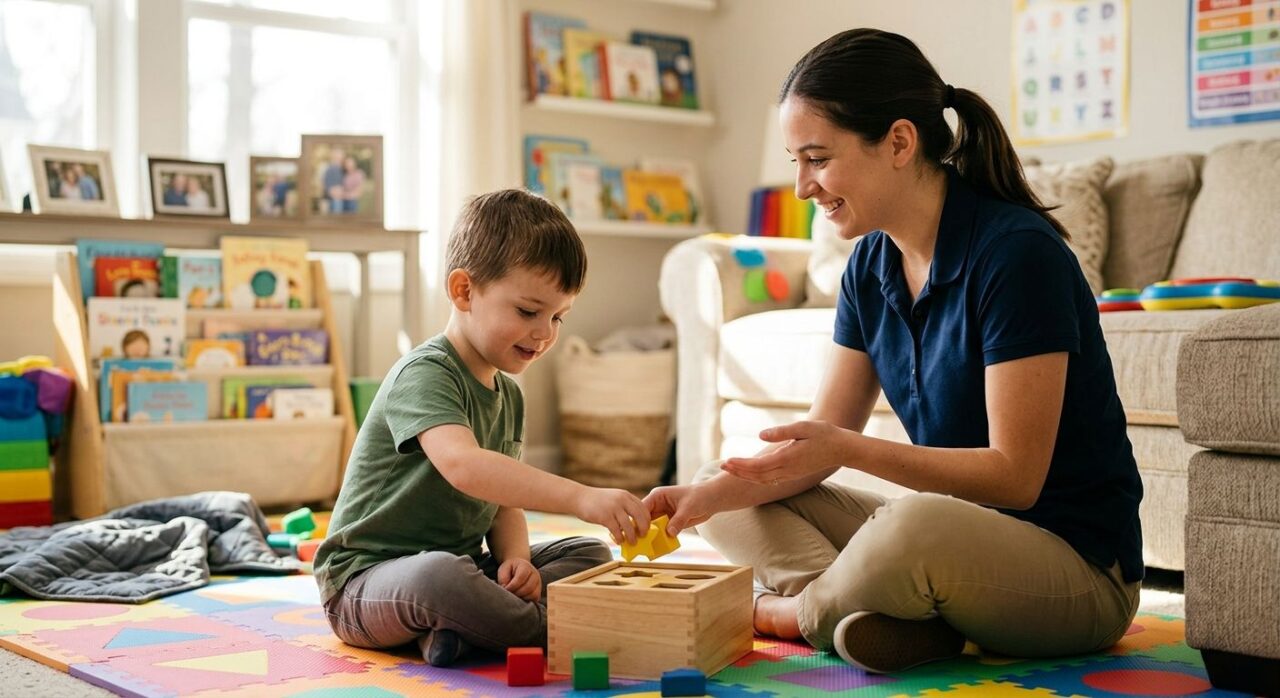
In a home setting, your child’s favorite activities — building with blocks, playing pretend, or singing songs — become part of targeted practice that builds social communication skills like initiating games, taking turns, sharing attention, and reading social cues.
Everyday moments — asking for help, cleaning up, transitioning between activities — become chances to practice adaptive behavior skills. A Board Certified Behavior Analyst (BCBA) designs and oversees the plan, meeting all BCBA supervision requirements, while a 1:1 Registered Behavior Technician (RBT) implements playful sessions right in your family’s home, consistent with our home-based model in Virginia and Illinois.
You’re not on your own — A Bright Future is Waiting for Your Child, and we’ll help you get there. Results may vary based on individual patient circumstances.
6. Adaptive Behavior Skill Building
Alongside communication, adaptive behavior skills are essential building blocks for daily life. Skills like dressing, hygiene, mealtime routines, and basic safety awareness help your child grow more independent, and they represent meaningful aba therapy autism benefits families observe with home-based ABA.
We break each skill into small, manageable steps and practice them in your child’s real environment—the bathroom, kitchen, playroom—where natural learning happens. Building adaptive behavior skills also reinforces social communication skills; your child might learn to request a break or express a need during a routine.
Our BCBAs (credentialed by the Behavior Analyst Certification Board) design these goals after a thorough assessment. Our RBTs deliver 1:1 practice, and we provide parent training so you can support these everyday life skills between sessions in Illinois and Virginia. Results vary by child, and we encourage consulting a healthcare professional for diagnosis or treatment advice. Each small victory brings your child closer to a brighter, more independent future—and you’re not on your own. These skills, combined with social growth, set the stage for long-term success.
7. Family and Caregiver Empowerment
When families ask about aba therapy autism benefits, the most meaningful results often begin at home. Our approach is built on a simple belief: WE COUNT ON OUR PARENTS. You are not bystanders in your child’s progress—you are active, essential members of the care team.
Our BCBAs and Registered Behavior Technicians coach you to reinforce social communication skills and adaptive behavior skills during everyday moments—mealtime, play, bedtime routines—so learning feels natural, not clinical. This hands-on guidance helps your child generalize new abilities across home, school, and community settings in Virginia and Illinois, where our local teams provide consistent, in-person support.
We also collaborate with your child’s school, helping you advocate for classroom strategies that align with therapeutic goals. Ongoing communication with your BCBA means you always have a partner to answer questions and adjust strategies.
You’re not on your own. Whether you’re navigating the early stages of a diagnosis or looking to build on existing skills, we provide the training, resources, and encouragement your family deserves. If you are ready to explore a personalized, home-based approach, reaching out for a consultation is the next step.
Results may vary based on individual patient circumstances; please consult with a healthcare professional for diagnosis or treatment advice.
8. Measurable, Data-Driven Progress
We measure every step so you never have to wonder if therapy is working. One of the most powerful benefits of ABA therapy for autism is that progress isn’t guesswork — registered behavior technicians record trial-by-trial data during every 1:1 session, and our BCBAs analyze those objective data points immediately to keep each individualized plan truly responsive to your child.
That data loop captures gains in social communication skills — like initiating a conversation or requesting a preferred item — and adaptive behavior skills — like following a self-care routine or completing a daily living task. When a target isn’t yet mastered, the plan adjusts; when a skill is solid, we build on it. You’re not on your own through any of this.
Parents see growth clearly through session notes, progress graphs, and BCBA-led parent reviews where data is walked through in plain, jargon-free language. A bright future is waiting for your child, and our measurement system lets you watch it take shape. Results may vary based on individual patient circumstances.
Start Your Child’s Journey with ABA Therapy
Taking the first step to unlock ABA therapy autism benefits is simpler than you might imagine. When you connect with our team, we’ll schedule a BCBA assessment to learn about your child’s unique strengths and needs, then design a personalized, evidence-based plan that honors your family’s daily life.
Your child will receive one-on-one support from a trained Registered Behavior Technician, guided by a Board Certified Behavior Analyst, to nurture social communication skills and build adaptive behavior skills like dressing or following routines. We count on our parents, too—our team provides parent training and school collaboration, and handles insurance management, so you can focus on watching your child grow.
Ready to begin? Contact us to book an initial consultation. Together, we’ll help your child succeed with ABA. A Bright Future is Waiting for Your Child.
