
Table of Contents
- Finding the Right ABA Therapy for Preschoolers Near You in Illinois and Virginia
- What Makes ABA Therapy Effective for Preschool Development
- Key Benefits of Home-Based ABA Therapy for Your Preschooler
- How Brighter Care ABA Delivers Preschool Therapy Services
- Best Practices for ABA Therapy Success in Preschool-Age Children
- Partner with Brighter Care ABA for Your Preschooler’s Bright Future
Finding the Right ABA Therapy for Preschoolers Near You in Illinois and Virginia
If you’re searching for aba therapy for preschoolers near me in Illinois or Virginia, you’re not alone. Brighter Care ABA provides personalized home-based ABA programs for young children across both states. Our services are built on evidence-based early intervention and are designed to help preschoolers develop communication, social, and adaptive skills right in your home.
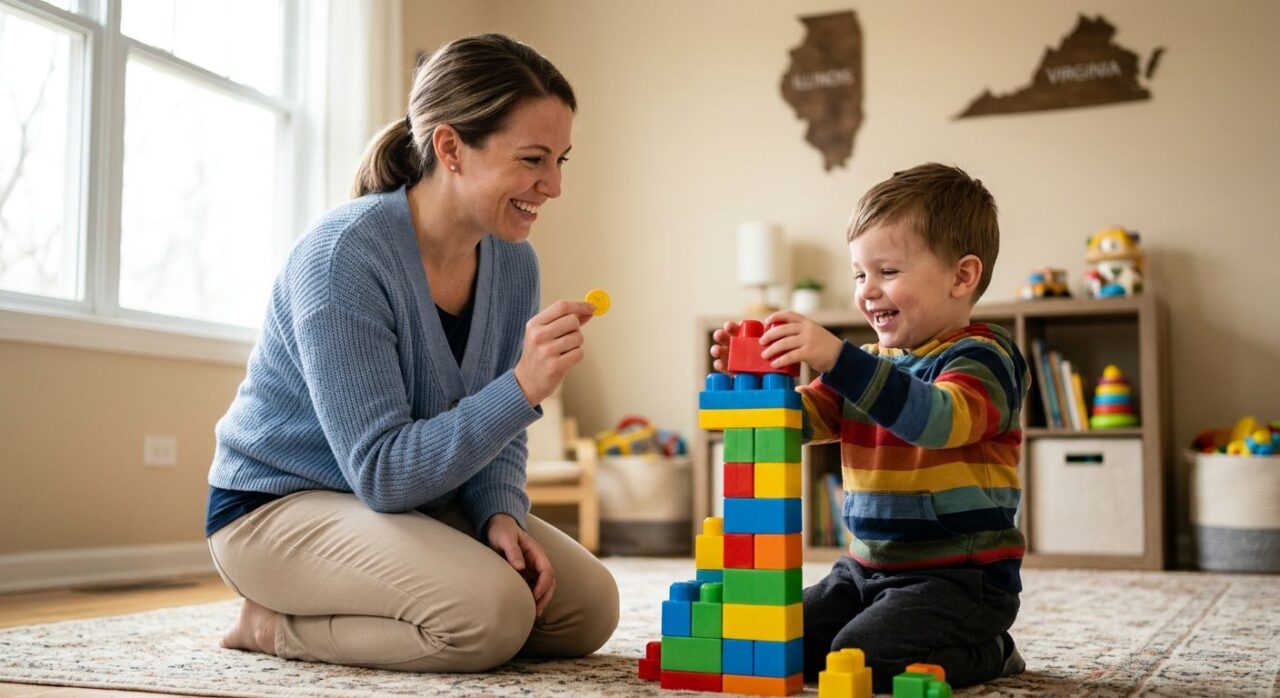
Our approach combines hands-on, in-home aba therapy with early intensive behavioral intervention. We know that starting therapy early can make a meaningful difference. Every program is overseen by a Board Certified Behavior Analyst (BCBA) and delivered one-on-one by Registered Behavior Technicians (RBTs). In-home sessions let your child learn where they feel most comfortable, and our team works closely with you from the very beginning.
We count on our parents as essential partners. That’s why every plan begins with an autism caregiver consultation—a chance for us to understand your family’s needs and align on goals. Through ongoing parent training, we empower you to reinforce skills at home, in the community, and beyond. Results may vary based on individual patient circumstances, but our commitment to each child’s progress never wavers.
If you’re ready to take the next step, reach out to us today to schedule an intake. In the next section, we’ll explore how our parent training program makes a lasting difference for families across Illinois and Virginia.
What Makes ABA Therapy Effective for Preschool Development
If you are searching for aba therapy for preschoolers in your area, understanding what makes it effective can give you confidence. Building on the fundamentals of ABA, here is why it is especially powerful for preschool development.
The Science Behind Early Intensive Behavioral Intervention
Early intensive behavioral intervention harnesses the remarkable brain plasticity of children ages 2 to 5 to build foundational skills. We ground our approach in research from the National Center for Biotechnology Information (NCBI, part of the National Institutes of Health), which documents that EIBI can lead to improvements in IQ, language, and adaptive behavior. The Association for Behavior Analysis International (ABAI) recommends 20 to 40 hours of weekly treatment for young children, underscoring the intensity needed for meaningful progress. By front-loading therapy during this critical developmental window, we help children learn how to learn—teaching them imitation, attention, and basic communication that open the door to more complex skills. This is why we prioritize early intervention and work closely with families to maximize therapy hours during a child’s most formative years.
How ABA Therapy Targets Social and Communication Milestones
ABA therapy directly targets the milestones preschoolers need to thrive: joint attention, imitation, turn-taking, and peer play. In a natural home setting, our therapists can teach a child to initiate a greeting when a family member enters the room, turning a daily moment into a learning opportunity. Communication milestones—like responding to one’s name, requesting desired items, and labeling objects—are built through intentional practice. When a child struggles with vocal speech, we introduce picture exchange or augmentative communication systems so they can express wants and needs effectively. For example, during snack time, a therapist might guide a child to hand over a picture of a cracker to receive it, reinforcing the power of communication. Because of this structured yet natural approach, children begin to engage more fully with siblings and caregivers, transforming everyday interactions into skill-building moments.
The Role of BCBAs and RBTs in Preschool Programs
Our programs are anchored by a supervision structure that ensures quality and consistency. A Board Certified Behavior Analyst (BCBA) designs each individualized treatment plan, drawing on data and caregiver input to target skills that matter most to your family. Registered Behavior Technicians (RBTs), who receive specialized training under BCBA oversight, then deliver 1:1 in-home aba therapy sessions. We incorporate parent training into every plan so that you can reinforce skills between sessions and during daily routines. This collaborative model aligns with the standards of the BACB certification board, which credentials BCBAs, BCaBAs, and RBTs. At Brighter Care ABA, we combine this clinical expertise with a compassionate, family-centered approach. (Results may vary based on individual patient circumstances.) Understanding this effectiveness sets the stage for how we bring these strategies into your home.
Key Benefits of Home-Based ABA Therapy for Your Preschooler
Now let’s explore the key benefits that make home-based ABA therapy a great choice for your preschooler. From personalizing sessions around your family’s natural routines to partnering with you as caregivers and managing insurance on your behalf, our approach is designed to reduce stress and help your child thrive. It’s how we help families Succeed with ABA right in the comfort and convenience of their own homes.
Personalized Learning Within Your Family’s Daily Routines
When therapy takes place at home, every moment becomes a learning opportunity. Your child’s BCBA designs an early intensive behavioral intervention program that fits directly into existing activities like mealtime, playtime, and bedtime, so skills are practiced in the exact context where they’ll be used. This natural approach to in-home ABA therapy supports real skill generalization, helping your preschooler transfer what they learn to everyday life without having to bridge a gap between a clinic and your living room. We see unique progress with families we serve in Illinois and Virginia, where a familiar environment lowers anxiety and increases engagement. You get to see strategies modeled in your own kitchen or play area, which builds your confidence and reduces the stress of having to travel to an unfamiliar setting for each session.
Parent Training: Partnering for Consistent Progress
We believe that lasting progress happens when a child’s entire support system works together, and that’s why we count on our parents as partners. According to Brighter Care ABA’s own FAQ, parent training improves ABA outcomes by teaching caregivers strategies to reinforce skills across home, school, and community settings. Our BCBAs share evidence-based techniques like modeling, prompting, and positive reinforcement that you can weave into daily interactions, transforming ordinary routines into consistent teaching moments. You’re not on your own. This partnership means that the gains your child makes during a session don’t stop when the therapist leaves. Consistent follow-through across all environments helps your preschooler build on successes faster and with greater confidence, so every family member plays an active role in supporting a bright future.
Insurance Management: Simplifying Access to Care
Navigating insurance paperwork can feel overwhelming, but we believe your focus should stay on your child’s growth, not on administrative hurdles. Brighter Care ABA takes the lead in managing the entire authorization and claims process, from drafting a detailed clinical treatment plan to communicating directly with your insurance carrier. We handle the entire process, including ABA therapy prior authorization, so you can focus on your child’s progress. According to our internal resources, a formal diagnosis alone does not guarantee coverage—insurers require proof of medical necessity, and our team builds that case through comprehensive documentation and ongoing re-authorizations every six months. By advocating on your behalf, we work to prevent gaps in service and keep your preschooler’s therapy consistent and uninterrupted.
Results may vary based on individual patient circumstances.
These benefits work together to give your child a strong foundation—and Brighter Care ABA is here to help every step of the way.
How Brighter Care ABA Delivers Preschool Therapy Services
Here is how we deliver on that commitment. When parents search for aba therapy for preschoolers near me in Chicago or across Illinois, they find our family-focused approach that begins with a comprehensive assessment and continues through ongoing milestones. Our preschool services follow a structured yet flexible sequence—from initial assessment to personalized treatment planning, in-home and school-based sessions, and continuous milestone tracking—all built on evidence-based practices and deep family involvement.
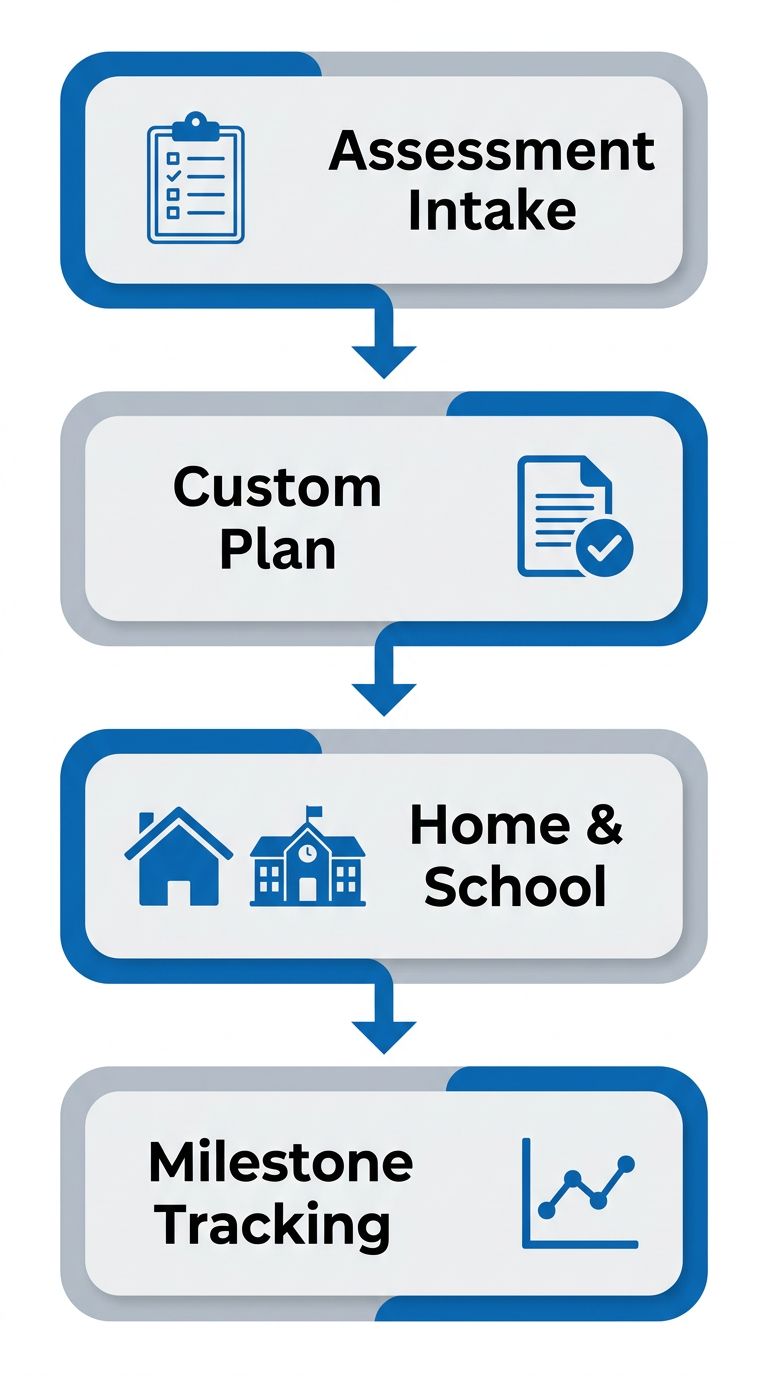
Four-step process for preschool ABA therapy services at Brighter Care ABA.
Starting with a Comprehensive Assessment and Intake
We begin with a thorough evaluation by a Board Certified Behavior Analyst (BCBA) who assesses your child’s social, communication, and adaptive skills. Rooted in early intensive behavioral intervention principles, this baseline assessment identifies strengths and target behaviors, laying the groundwork for an intensive, personalized program. The evaluation typically includes structured observations and caregiver interviews to capture a comprehensive skill profile. By observing your child in their natural environment, we gain a clear picture of current abilities and the tailored support they need. This initial intake is a collaborative process; we listen to your concerns and involve you every step of the way, ensuring our early intervention approach aligns with your family’s priorities.
Designing a Customized Treatment Plan
The BCBA translates assessment data into a detailed treatment plan with specific, measurable goals targeting communication, social interaction, and daily living skills. Grounded in the same early intensive behavioral intervention framework, the plan outlines the recommended frequency and structure of 1:1 therapy sessions and the strategies we will use to teach each skill. Parent training and collaboration with educators are also woven into the plan to reinforce skills across all settings. We also ensure the treatment plan serves as the clinical documentation required for insurance authorization, handling that entire administrative process on your behalf. This personalized roadmap evolves with your child, always reflecting their current needs and your family’s vision for their growth.
Delivering In-Home and School-Based Sessions
Our 1:1 therapy sessions are delivered by Registered Behavior Technicians (RBTs) who work under the ongoing supervision of a BCBA. To ensure the highest quality care, our RBTs stay current with all credentialing requirements, including RBT certification 2026. We make it easy to access aba therapy for preschoolers near me in Chicago by offering flexible half-day schedules and both in-home and school-based options. Sessions can be conveniently scheduled around your preschooler’s morning or afternoon routines. We provide in-home ABA therapy across Chicago and surrounding Illinois communities, as well as in Virginia, and we also collaborate with schools to support your child in the classroom. Parent training is integrated into our model, empowering you to use ABA techniques during everyday moments and further promoting generalization of skills. You don’t have to be alone—we count on our parents as active partners in this journey, and our team is always just a call away.
Tracking Milestones and Adjusting Goals
Our RBTs collect detailed data during every session, tracking progress on each target skill. The BCBA reviews this information regularly and meets with you to discuss advancements and any emerging areas of focus. We also incorporate your observations and feedback, because you know your child best. Based on data trends and family insights, we adjust goals and teaching methods to keep your child moving forward, ensuring the treatment plan remains finely tuned to their development. We schedule regular progress meetings—typically every few months—to celebrate gains and plan next steps, always keeping you in the driver’s seat. Through this continuous feedback loop, we help children Succeed with ABA—building independence in a way that lasts. With compassionate, evidence-based support, A Bright Future is Waiting for Your Child.
Disclaimer: Results may vary based on individual patient circumstances. Please consult with a healthcare professional for diagnosis or treatment advice.
Best Practices for ABA Therapy Success in Preschool-Age Children
Searching for aba therapy for preschoolers near me in Chicago can feel overwhelming, but You’re not on your own. At Brighter Care ABA, we believe A Bright Future is Waiting for Your Child, and these best practices will help you Succeed with ABA.
Setting Realistic Goals and Celebrating Milestones
Working with your BCBA to define SMART goals keeps therapy focused on what matters most. The Association for Behavior Analysis International emphasizes that clear, measurable targets drive skill acquisition.
- Set specific targets: Aim for outcomes like independently requesting a favorite item in 4 out of 5 opportunities. Align goals with your family’s daily routines so therapy feels relevant.
- Celebrate every win: Notice small, observable milestones—making eye contact during a greeting, following a two-step instruction, or sustaining joint attention for a few seconds. These moments build motivation for everyone.
- Review progress monthly: Meet with your BCBA to discuss data and adjust priorities. When you see a new skill mastered, you know the plan is working.
Collaborating with Preschool Educators and Providers
Consistency between home, therapy, and the classroom is essential. If your child receives in-home aba therapy, sharing information with the teacher builds a unified support system.
- Schedule monthly check-ins between your BCBA and the preschool teacher to align reinforcement strategies and exchange behavioral data.
- Provide a behavior cheat sheet listing target behaviors and preferred reinforcers. This helps staff support your child consistently throughout the day.
- Share in-home progress data so the teacher can see what works. For evidence-based collaboration guidelines, refer to the behavior analysis association’s recommendations on school partnerships.
- Coordinate shadow aide support when needed, working with the school to integrate the aide smoothly.
Using Data to Guide Treatment Decisions
Objective data collection is the backbone of effective ABA. Each session, your therapist records responses, allowing us to graph progress over time. According to the National Center for Biotechnology Information, early intensive behavioral intervention supported by regular data analysis leads to measurable gains in language and social behavior.
- Track daily performance: Log trial-by-trial accuracy, duration of on-task behavior, and frequency of target responses.
- Review graphed data monthly: With your BCBA, look for trends and adjust antecedents or consequences as needed.
- Use data to celebrate: When a skill reaches mastery, the numbers confirm progress, reinforcing your and your child’s hard work.
Planning for Transition to Public Preschool
When your child in Illinois is ready to step into a public preschool classroom, early planning ensures continuity.
- Start planning at least three months ahead: Gradually reduce therapy hours while introducing classroom routines and social expectations.
- Conduct a school readiness assessment: Your BCBA can identify needed supports—a visual schedule, social stories, or a shadow aide.
- Practice school skills at home: Role-play circle time, following group instructions, and managing transitions to build confidence.
- Hold a transition meeting with the preschool team to share your child’s strengths, reinforcement strategies, and any behavior support plan.
We at Brighter Care ABA will guide you through the transition to maintain your child’s momentum.
Remember—every child progresses at their own pace, and results may vary.
Please consult with a healthcare professional for diagnosis or treatment advice.
Partner with Brighter Care ABA for Your Preschooler’s Bright Future
If you’re looking for ABA therapy for preschoolers near me, Brighter Care ABA brings personalized care right to your home in Illinois and Virginia. We design evidence-based early intensive behavioral intervention plans that help your child build communication, social, and adaptive skills where they feel most comfortable—with 1:1 support from Registered Behavior Technicians, all supervised by Board Certified Behavior Analysts as certified by the Behavior Analyst Certification Board (BACB). Our clinical team draws on peer-reviewed studies available in the biomedical research database to shape strategies grounded in the latest research, so every session moves your child toward meaningful milestones.
You’re not on your own. In addition to in-home ABA therapy, we provide parent training that equips you with practical tools for daily routines, and our team manages insurance eligibility and claims so you can focus on your family. Succeed with ABA—with a partner who listens, adapts, and celebrates your child’s progress right alongside you.
A Bright Future is Waiting for Your Child. Contact our local team today to schedule your free consultation and take the first step toward compassionate, coordinated care.
Results may vary based on individual patient circumstances.
Resources
- Parent Training Improves ABA Therapy Outcomes
- How ABA Providers Assist with Insurance Authorization
- 2026 RBT Certification Rules for Current RBTs
- Clinical Treatment Plan for ABA Prior Authorization
- BCBA and RBT Career Opportunities at Brighter Care
- Brighter Care ABA Therapy for Children with Autism
- ABA Intervention and Consultation for Autism Care
- BACB Certification Board for Behavior Analysts
- NCBI Biomedical Database for Research and Education
- ABAI International Conference and Behavior Analysis Resources
